|
|
|

|

|
Shooting Stars
John Haberin New York City
Michael Kimmelman: The Accidental Masterpiece
Someone, somewhere must still fear art's inching closer to that all-American mix of mass entertainment and big business. That someone definitely does not work for The New York Times.
In spring 2006, a special section on museums provides further evidence that the time for rearguard action has passed. So does a book on The Accidental Masterpiece, by the paper's head critic, Michael Kimmelman, which has received a telling rejoinder from Hal Foster. The section promotes art as a luxury good, while Kimmelman presents it as the product of chance discoveries by creative genius. Either way, we are talking class. 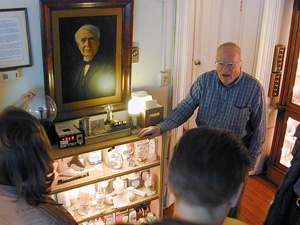
Museums mean business
Just recovering from an Armory Show that foregrounds the business of art? Tired of Chelsea's short attention span, with endless choices laid out horizontally, as in a shopping mall? Get out there and buy.
That special section has a simple theme: stop worrying and love the bomb. Or, as a visitor to the 2006 Biennial might put it, have even more fun when the art really bombs. The issue of The Times goes well with a feature story the same month in New York magazine. It warns of a "contraction" or outright crash, but not long before advising you on what to buy now.
Whining aside, I should not take the sordid evidence at face value: a special section exists to increase advertising as much as readership, and advertisers much prefer readers with the money to buy. It also aims to intrigue readers who normally do not care about its subject matter. Those facts cut both ways, however. They allow both magazines to write off any bad news as biased. And yet the problem at hand extends to shared business interests between the arts and the media—and I do not, for once, mean new media.
One can get more from the section by reading it critically. Savor the flattery to museums, now offering better food and flashier Web sites—ironically, two reasons not to bother seeing art. Savor that a box for "coming attractions" promotes existing shows, part of the market's eternal focus on the short term. Appreciate that MoMA is adding bar codes to works in storage, as if to assist taking them to the checkout counter.
Worried about joining the right clientele? The Frick, says The Times, has at last "attracted socialites," and Woody Allen has visited the Modern to ask the reporter's opinion of the Knicks. The director at the Art Institute of Chicago has "sparkling eyes" and boldly crossed arms. Better yet, he "can reel off a Red Sox player's stats as readily as he can a painting's provenance." The ode goes on to call him an "agent for change." Perhaps change will come after "the next two years devoted to the American artists Charles Sheeler, Jasper Johns, Winslow Homer, and Edward Hopper."
While the section offers no help at all with actually looking at pictures, not even of Edward Hopper, it includes a telling look at a controversial subject: who owns a nation's heritage? Another article's advice on navigating a packed blockbuster has real merit, too, to go with its entertainment value. I could not help noticing that it boosts the Museum of Modern Art's Munch retrospective, which has larger, easier to view work and smaller crowds than, say, for past blockbusters of Leonardo or van Gogh drawings. But hey, who wants yesterday's papers?
The critic as mouthpiece
The section makes one see the entire newspaper differently, too. On other pages, an experienced London reporter reviews Michelangelo drawings at the British Museum mostly by spouting press releases. He makes me realize, with more than a little shame, how dependent I have become on background kits supplied to the press. True, they fill out my own background and complement a close look at the art. They give me a better understanding of the curator's point of view and how that shapes your view of the work. But am I falling for spin, and what happens to ordinary reporters on a deadline?
The Michelangelo review, for example, makes a huge fuss about the work the artist "wanted to hide." Now, the Italian was secretive. One recognizes his dark, obsessive side from his working in private on much of the Sistine Chapel. And art historians continue to debate why.
Some have stressed the failure of one section of the Sistine ceiling, when fresco adhered badly and required painting over from scratch. Michelangelo had in fact objected to the pope's commissioning him, apologizing for his inexperience as a painter. However, the delay caused him to dismiss his assistants, a model for dealing with executive business failure today. Some stress instead his rivalry with other artists, especially Raphael. Others point to his depressive, solitary nature and prickly sensibility. Setbacks in patronage that contributed to all of these issues.
However, surely the reporter knows that hiding drawings presumes that someone is dying to see them. The concept of drawings as an independent art form, a finished product that anyone would consider displaying, was still coming into being. Indeed, it grew out of new understandings of an artist as an important person—exactly the sort of thing that Michelangelo with his secrecy helped to create. Its legacy lingers on in newspaper coverage of art, business, and celebrity today.
A writer like this purports to function as a critic, but he becomes instead a mouthpiece for the museum's point of view. Moreover, that point of view comports with the idea of the artist as solitary genius. That same idea powers the transformation of the twentieth-century avant-garde into a twenty-first century canon, ripe for purchase. It also supplies a grain of truth to complaints by Raphael Rubenstein. He has argued that critics have given up the role of critic. They do not call art-world stars to account, he says, under the guise of interpreting art and educating readers.
Still, one should not lose hope, so long as one recognizes the entanglements enough to educate and interpret after all. As silly as things get, even mainstream artists, dealers, curators, and museum directors care passionately about what they do. Lone artists and alternative spaces still present alternatives. At the same time, a wide range of choices reflects the domination of markets. In fact, the problem resists easy solution in part because of the lack of a well-defined problem. If one cannot quite sort out the present or the future, one can always enter the market oneself and take one's chances.
Accidents will happen
Michael Kimmelman may like it when artists roll the dice, but do not place your bets too soon. In The Nation of November 7, 2005, Hal Foster—a professor at Princeton, editor of October, and co-author of a new history of modern art—offers a truly perceptive look at the art scene in an age of high stakes. Reviewing The Accidental Masterpiece, he finds more behind Kimmelman's view of contemporary art than a few chance discoveries.
Kimmelman practices art criticism as celebrity profile. He has trailed living artists around their favorite museums. He has shot hoops with Raymond Pettibon and stood in admiration as Walter de Maria chased lesser mortals away from his towering earthworks. He has tracked Matthew Barney to the Great Salt Lake. Even in reviewing past masters, he glorifies the ease of their achievements rather than risk a more patient critical explanations might diminish the magic.
Kimmelman shows a refreshing openness to artistic quirks and accidents common to mere mortals. He slips smoothly from one tale and one personality to another. Still, his signature moment comes when Sol LeWitt excitedly tells Eva Hesse just to get her work done. Discoveries will follow, if only she has the courage to take her chances. So, too, will the changes they make in a viewer's awareness.
Foster's measured style is not about taking chances. He could serve as the polar opposite to the magazine's regular art critic, Arthur C. Danto. Danto comes to art history—and, more recently, curating—through the philosophy of art. Foster helped discover and popularize the discourse of Postmodernism in contemporary art. Danto's signature examples come from Andy Warhol and late Modernism. Foster has the ability to weave together the crises of the present and historical currents in early Modernism.
Danto also has the clarity of a great writer, plus the philosopher's skill at teasing out an idea until it coheres. He says something obvious—and then he makes a reader work at a fuller understanding. Foster runs to words like topos and to implicit, often daunting connections.
Still, Foster's insight and historical grounding made his review, like his books, well worth the work. They also give him the tools to rip Kimmelman's account apart. At its center, Foster finds a suspiciously cheerful and accepting philosophy of art. As architecture critic some years later, Kimmelman was to argue forcefully for public spaces, the future of Penn Station apart from Moynihan Train Hall, and the former Museum of American Folk Art. Still, Foster is onto something.
Turn out the lights
The Accidental Masterpiece sees art's accumulation of accidents as an awakening of wonder. The artist at its center, Dr. Hicks, collected some 75,000 light bulbs, in hope that a light would go on in the viewer. That may sound like nothing more than the current fads for oversized installations and outsider art. It may sound yet again like a comfortable day in Chelsea.
It may, but Foster spots how Kimmelman updates a European modernist project for the American scene today. Back then, Victor Schlovsky wrote of defamiliarization, and he meant a kind of awakening, but a highly critical one. By reducing unusual, often dangerous experiences to lucky accidents, Kimmelman speaks to an America that mythologies individual achievement and the eternal possibility of redemption. Foster does not entirely dismiss the "dialectic of the mundane and the exceptional." However, he insists that it must include dark corners and dirty truths as well as consolation. And he is right.
Foster knows a little too much about modern art for Kimmelman's good. He does not really respond to Kimmelman's strengths, which I can understand. Still, I can still savor the anecdote that constitutes a happy discovery, the description that makes a personality come alive. That quote from Sol LeWitt changes how I think about Hesse, but also about LeWitt. It places him on the same page with Hesse, a close friend who rejected his icy logic. It reveals the unfettered enthusiasm, too, behind his seemingly rigorous conceptual art.
Foster also does not comment on some of Kimmelman's most serious weaknesses. They include the inevitable problems in converting routine weekend reviews into a book. Kimmelman's theme often sounds like the afterthought it is—and less than convincing. Maybe Dr. Hicks or Marcel Duchamp could make an accidental masterpiece. Philip Pearlstein and de Maria, however, weed their art almost as obsessively as de Maria's New York Earth Room.
Foster's focus on past and present avant-gardes overlooks a more serious problem, too. Kimmelman's approach may or may not deal adequately with art, but it fits all too well with the culture of art now. It seems almost tailor-made for another Times special section. Kimmelman's coupling of accident and the "masterpiece" adds up to something awfully familiar. Together, they reinforce the tendencies toward the gallery as shopping mall, installations as the product, and the artist as the brand name. The last one buying please turn out the 75,000 lights.
What Jerry Saltz calls Chelsea's "battle for Babylon" will not necessarily take place over Schlovsky's dead body. Still, one can appreciate Foster's understanding of how, when it comes to culture wars, those who do not remember the past may indeed repeat it. To search for a few dead bodies in that war zone, let me end with two kinds of stardom that keep buyers happy.

The special section of The New York Times appeared March 29, 2006. Hal Foster reviewed The Accidental Masterpiece by Michael Kimmelman (Penguin, 2005) in The Nation of November 7, 2005.